Open-world games aren’t always known for having a good story, specifically because of the way open-world level design interacts with a straightforward narrative, but gamers are debating which ones do. The best stories have stakes, urgency, and tight narrative beats that often fall way to player freedom, grandiose scale, modular quests, and more. Everyone has played an open-world game where the story didn’t quite make sense; that’s true of even the best open-world games. Skyrim‘s main quest feels much less apocalyptic when players spend hundreds of hours ignoring it, but some open-world games marry its design mechanics and overall narrative well.
Recently, Redditor NoahDoyleeee512 posted in the r/videogames subreddit looking for a new open-world game to play this summer. They explained that they played through Elden Ring last summer and spent 110 hours in a single playthrough; specifically, Noah wants a game they can play every day throughout the summer. On top of that, they explain that Red Dead 2 is their favorite game ever, and they haven’t played a lot of open-world games. They did say they’ve played the Spider-Man games, but they weren’t the biggest fan. And the comments are filled with debate, but more specifically, a ton of solid options for open-world video games with strong stories.
Countdown: The Top 100 Best Games of All Time (According to You)
GameRant readers vote to determine the definitive list of the top 100 best video games of all time.
The Best Open-World Games with Strong Stories
- Cyberpunk 2077 & The Phantom Liberty DLC
- The Witcher 3 & DLC
- Kingdom Come: Deliverance/Kingdom Come: Deliverance 2
- Red Dead Redemption/Red Dead Redemption 2
- Grand Theft Auto 4/Grand Theft Auto 5
- Bully
- Death Stranding/Death Stranding 2
- Metal Gear Solid 5
- Horizon Zero Dawn/Horizon Forbidden West
- Fallout 3/New Vegas/Fallout 4/Fallout 76
- Morrowind/Oblivion/Skyrim
- Breath of the Wild/Tears of the Kingdom
- NieR: Automata
- Sleeping Dogs
- Ghost of Tsushima/Ghost of Yotei
- Two Worlds 2
- Dragon Age: Inquisition
- Elden Ring
- Days Gone
- Monster Hunter: World
- Monster Hunter Rise
- Monster Hunter Wilds
Some games that were not open world were recommended and, for the sake of brevity, omitted here.
Going through the list of recommendations gives some interesting insights into the most dominant open-world games. For one, pretty much every one of these games is AAA, with no recs leaning toward more indie open-world games. Secondly, the way some of these open-world games approach story is drastically different, from straightforward narratives to lore and worldbuilding. Finally, a handful of major studios/creators are indirectly mentioned: CD Projekt Red, Rockstar Games, Kojima, Bethesda, Nintendo, and Capcom, just to name a few.
GameRant Quiz
Easy (15s)Medium (10s)Hard (5s)
It also feels worth mentioning that GameRant readers recently voted for the top 10 games of all time, and of those top 10 games, 5 of them are recommended by these Redditors. In order, GameRant readers voted that Red Dead 2, Skyrim, Elden Ring, The Witcher 3, Batman: Arkham City, Resident Evil 4, God of War (2018), Metal Gear Solid, Cyberpunk 2077, and God of War Ragnarok constitute the top 10 of all time. Red Dead 2, Skyrim, Elden Ring, and The Witcher 3 are the top 4 and are recommended above, with Cyberpunk 2077 also cracking GR’s top 10 and as a recommendation in this debate.
Going even further is where things become a little unwieldy. First off, you’ll notice I criticized Skyrim‘s story in the opening paragraph, yet it’s one of the games voted for the top 10 and as a recommendation for an open-world game with a great story. Several of the recommended games also had detractors within the debate, suggesting that the story aspect of the recommendation was itself debatable, and that leads to a very important question, even if it sounds unrealistically lofty: What is a story in video games?
For example, Reddit user Routine-Secret-413 questioned OP’s meaning since “Elden Ring has no story,” suggesting that they were mistaking lore with story. “Elden Ring has incredibly lore (the history, worldbuilding, and background mythology written by GRRM), but the actual story—the actual narrative happening to your character in the present—is incredibly thin. The plot is essentially just ‘Wake Up, Kill Demigods, become Elden Lord…Elden Ring is a masterpiece of environmental storytelling and worldbuilding, but calling its active story ‘one of the best ever told is a massive’ stretch.” And while the logic is there in the most stringent of definitions, applying stringent definitions to “open” world games doesn’t quite make sense to me.

Drag weapons to fill the grid
Drag weapons to fill the grid
EasyMediumHard
With all due respect to this Reddit user and many others who I know feel this way, expecting a “story’ in a video game to HAVE to be linear, told directly, or otherwise be a movie, novel, or even a stage play makes little sense. Every medium is different, yet all too often still, video games are held to a standard that applies to a medium that can only be consumed one way: the start of the novel to the end, the start of the movie to the end. While some throw in secrets and whatnot, and the perception of a story can be slightly different, everyone experiences novels and movies in similar ways.
The difference in movie viewing is whether you streamed it, watched it in a theater, watched it at home, and so forth. The difference in a video game experience, especially an open-world video game, is drastically different, so why define the story the same? Is environmental storytelling not a story? Is worldbuilding not a story? Is a quest, however small, in and of itself not a story? Perhaps instead of expecting an “actual” story and narrative that is A-Z, we can look at how video games tell stories in unique ways to an individual who plays them. No one receives the same story in an open-world game, and that shows in all of the above recommendations.
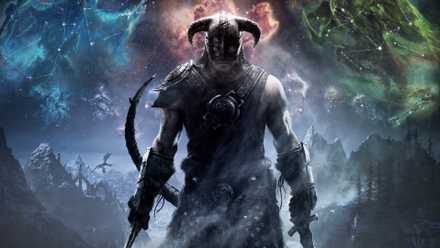
It’s Official: Bethesda Figured Out Yet Another Way to Re-Release Skyrim
Bethesda’s ongoing quest to re-release The Elder Scrolls 5: Skyrim as many times as possible continues.
Maybe my criticism of Skyrim and its recommendation as one of the best open-world game stories can both hold water. Yes, the main quest loses urgency because you can go anywhere and do anything. But isn’t that the story being told, the freedom to roam an entire country and become Elden Lord? I’m sorry—I mean, Dragonborn? I mean, Witcher? I mean, Courier? I mean, Link? I mean, Ghost? I mean, Hunter?
PakarPBN
A Private Blog Network (PBN) is a collection of websites that are controlled by a single individual or organization and used primarily to build backlinks to a “money site” in order to influence its ranking in search engines such as Google. The core idea behind a PBN is based on the importance of backlinks in Google’s ranking algorithm. Since Google views backlinks as signals of authority and trust, some website owners attempt to artificially create these signals through a controlled network of sites.
In a typical PBN setup, the owner acquires expired or aged domains that already have existing authority, backlinks, and history. These domains are rebuilt with new content and hosted separately, often using different IP addresses, hosting providers, themes, and ownership details to make them appear unrelated. Within the content published on these sites, links are strategically placed that point to the main website the owner wants to rank higher. By doing this, the owner attempts to pass link equity (also known as “link juice”) from the PBN sites to the target website.
The purpose of a PBN is to give the impression that the target website is naturally earning links from multiple independent sources. If done effectively, this can temporarily improve keyword rankings, increase organic visibility, and drive more traffic from search results.
Comments are closed, but trackbacks and pingbacks are open.